In Washington DC, the performance of fine-grained soils often dictates long-term foundation behavior, particularly in the Cretaceous and Pleistocene sediments underlying much of the District. Contractors excavating along the Potomac River or in the Anacostia floodplain frequently encounter the Potomac Group clays and silts, which can exhibit drastic volume changes with seasonal moisture variation. The plastic and liquid limits of these soils are not abstract index values; they correlate directly with swell potential and consolidation settlement, making them critical data points for any geotechnical report. When we evaluate these parameters, the results inform everything from the required depth of footings to the lateral pressures acting on retaining-walls in crowded urban sites where the water table sits less than ten feet below grade.
The plasticity index derived from Atterberg limits remains the single most reliable indicator of swell-shrink behavior in the District's overconsolidated clays.
Technical details of the service in Washington DC
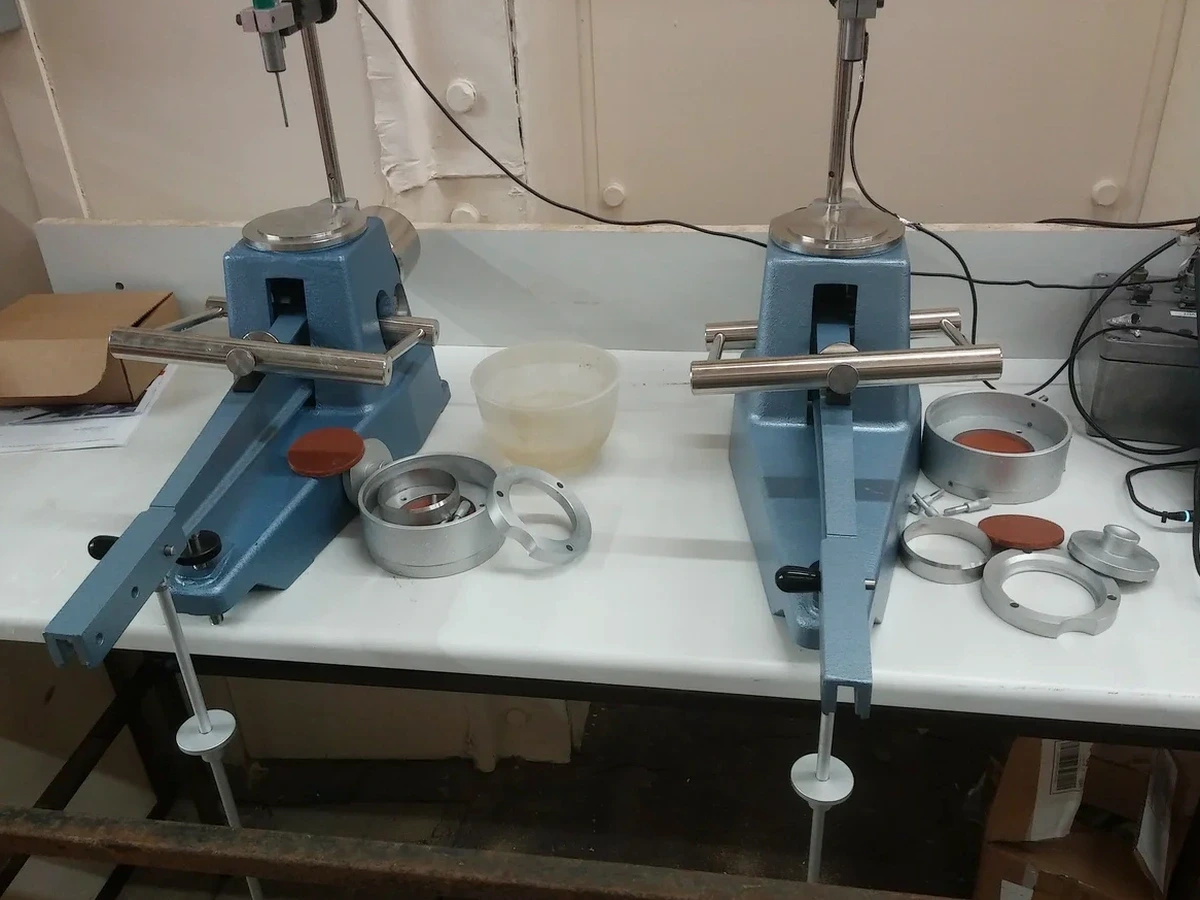
Field demonstration
Risks and considerations in Washington DC
A mixed-use development on H Street NE encountered a fifteen-foot layer of highly plastic clay with a liquid limit exceeding 80 and a plasticity index above 45. The general contractor initially specified a shallow foundation system, but the soil's high activity number—calculated from the Atterberg limits and clay content—indicated a severe shrink-swell risk under the slab-on-grade. Seasonal wetting and drying cycles in the Mid-Atlantic climate, where precipitation averages over forty inches annually, would have induced differential heave capable of cracking partition walls and jamming elevator guide rails. The structural engineer revised the design to a deep foundation system with piles socketed into the underlying decomposed rock, effectively isolating the structure from the active zone. Without the precise index testing, the distress mechanisms would have emerged within the first three years of occupancy, leading to costly post-construction litigation.
Our services
The index properties derived from Atterberg limits testing integrate directly with our broader geotechnical and pavement evaluation programs, ensuring consistency across the project lifecycle.
Foundation Soil Characterization
Combining Atterberg limits with one-dimensional consolidation and swell tests to quantify the volume change potential of cohesive soils beneath shallow footings and mat foundations throughout the District.
Pavement Subgrade Evaluation
Using the plasticity index to assess the frost susceptibility and drainage characteristics of subgrade soils for roadway and parking structure design in compliance with DDOT specifications.
Quick answers
How are Atterberg limits used to estimate soil swell potential in Washington DC?
The plasticity index, derived from the Atterberg limits, is the primary empirical predictor of swell potential. In the District, where the natural moisture content of the Cretaceous clays often hovers near the plastic limit, a PI greater than 25 combined with a liquidity index close to zero signals a high probability of expansion upon wetting. Our reports correlate the PI with the percent swell from ASTM D4546 tests to provide a site-specific risk classification.
What is the procedure for preparing a disturbed sample for Atterberg limits testing?
Per ASTM D4318, the sample is first oven-dried at 60°C to prevent mineral alteration, then pulverized with a rubber-tipped pestle to break down aggregates without crushing individual grains. The material passing the No. 40 (425-µm) sieve is retained for testing. We hydrate the specimen with distilled water and allow a minimum sixteen-hour curing period to ensure uniform moisture distribution before the percussion and rolling procedures.
What is the typical cost for Atterberg limits testing in Washington DC?
A single-point liquid limit and plastic limit test typically ranges from US$60 to US$100, depending on the number of specimens and whether the multi-point method is specified. Expedited reporting for projects under District permitting deadlines may incur a surcharge, but this ensures data delivery within forty-eight hours of sample receipt.
Why is the multi-point liquid limit method preferred over the single-point method?
The multi-point method requires a minimum of three liquid limit determinations at varying blow counts to construct a flow curve, allowing the calculation of the slope and verification of test precision. The single-point method assumes a standard flow curve slope, which can introduce systematic error in soils with atypical mineralogy, such as the micaceous silts found in the Piedmont-derived deposits west of Rock Creek Park.