One of the most common missteps we see in DC construction is treating the entire city as uniform ground. A project near the Anacostia River floodplain is a completely different beast than one on the Piedmont residual soils of upper Northwest. Contractors sometimes assume a standard spread footing will suffice, only to encounter compressible organic silts or uncontrolled fill that triggers costly redesigns and structural distress. Washington DC's geology, shaped by the Potomac River and a distinct fall line, demands more than a textbook approach. Our shallow foundation design process integrates detailed in-situ permeability testing to evaluate drainage constraints and Atterberg limits analysis to characterize the behavior of the local Potomac Group clays, ensuring the bearing strata can reliably support the intended loads.
In the District, a shallow foundation without a site-specific settlement analysis is just a gamble; we quantify the deformation so your structure stays level for decades.
Technical details of the service in Washington DC
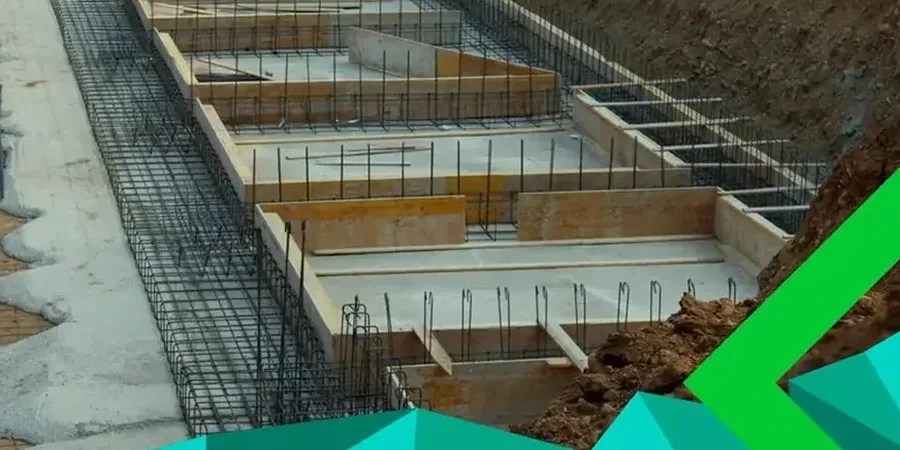
Risks and considerations in Washington DC
Washington DC's development history left a legacy of buried challenges. Much of the National Mall and surrounding federal district sits on filled marshland, while neighborhoods like Georgetown blend historic foundations with modern additions. We have encountered undocumented brick rubble, timber piles, and even 19th-century cisterns during site investigations. The biggest risk with shallow foundations here is differential settlement caused by these abrupt transitions in subsurface stiffness. A footing spanning natural terrace gravel and man-made fill can rotate or crack unless the design explicitly accounts for this heterogeneity. We mitigate this by combining high-resolution resistivity surveys to map fill boundaries with targeted test pits for visual confirmation, ensuring no hidden anomaly compromises the foundation performance.
Our services
Our shallow foundation design package for the District covers the full lifecycle, from initial feasibility to construction support:
Bearing Capacity & Settlement Analysis
We calculate allowable soil pressures using Terzaghi, Meyerhof, and Vesic methods, checked against IBC presumptive values and refined by site-specific consolidation testing on Potomac Group clays.
Foundation Geometry Optimization
We size and configure spread footings, continuous wall footings, and mat foundations to minimize concrete volume while meeting serviceability limits for total and differential settlement.
Fill and Recompaction Specifications
For sites underlain by uncontrolled fill, we develop engineered recompaction protocols or specify controlled low-strength material (CLSM) to create a uniform bearing platform before foundation construction.
Construction Phase Observation
Our engineers observe footing excavations, verify bearing material, and conduct or witness plate load tests to confirm that field conditions match the geotechnical design assumptions before steel placement.
Quick answers
What is the typical cost range for a shallow foundation design for a residential or small commercial project in Washington DC?
For a typical single-family home or small commercial building in the District, the fee for a site-specific shallow foundation design, including a limited soil investigation and the engineering report, generally falls between US$1,790 and US$3,590. The final cost depends on the number of footing types, the need for a DCRA permit expediting, and the complexity of the soil profile encountered.
Do IBC Chapter 18 requirements apply to all shallow foundations in DC, and how do you verify compliance?
Yes, the District of Columbia has adopted the International Building Code with local amendments, making Chapter 18 mandatory for all engineered foundations. We verify compliance by performing a subsurface investigation in accordance with the code's minimum boring requirements, classifying soils per ASTM D2487, and providing a geotechnical report that explicitly states the allowable bearing pressure, factored load combinations, and anticipated settlement values for the proposed foundation system.
How do you handle the variable fill and soft soils common near the Anacostia and Potomac waterfronts?
The reference range for this service in Washington DC is US$1.790 - US$3.590. The final price depends on the project scope and volume.