Anyone who has driven from the solid rock terraces of Upper Northwest down into the softer floodplain of Navy Yard knows the pavement tells a story. The ride quality changes, and so does what lies beneath. In Washington DC, pavement design has to reconcile these geologic contrasts—the metamorphic bedrock of the Piedmont against the compressible clays and silts of the Atlantic Coastal Plain that run under much of the federal core. Our laboratory team sees this split in every set of samples: a subgrade near Rock Creek Park might support a section with minimal base, while a site east of the Anacostia River demands a thicker, more resilient structural number to resist deformation. We work directly with the District’s design-build community to tailor flexible pavement sections that account for seasonal groundwater fluctuations and the legacy of historic fill that complicates so many DC sites, often pairing our analysis with a CBR testing program to anchor the structural design in measured strength values.
The difference between a 20-year pavement and one that fails in five seasons often comes down to how honestly the laboratory modulus represents the subgrade’s wet spring condition.
Technical details of the service in Washington DC
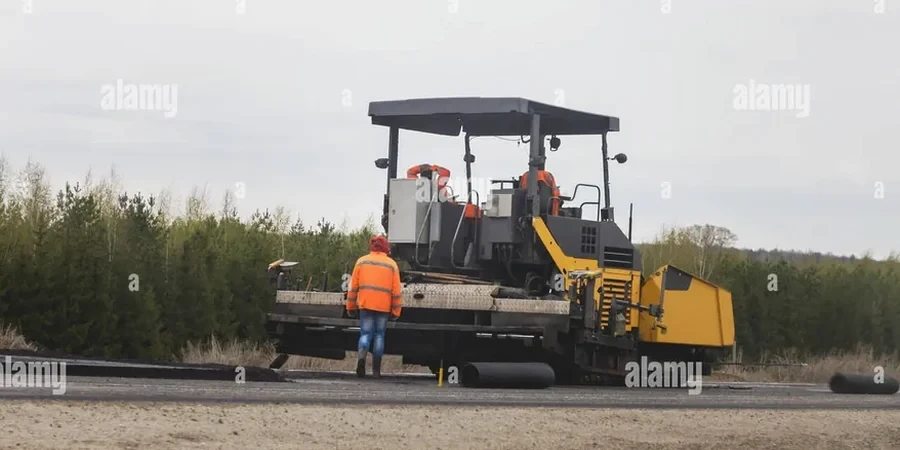
Risks and considerations in Washington DC
The Nuclear Density Gauge we deploy across Washington DC sites weighs about 30 pounds in its transport case and emits a narrow beam of gamma radiation that counts backscattered photons to measure in-place density. It is a routine piece of equipment, but the readings it produces carry enormous financial weight. A compaction test that shows 92% instead of the specified 95% triggers a remove-and-replace directive that can cost a contractor tens of thousands of dollars on a single city block. The bigger risk, however, is the one the gauge cannot see: a soft lens of organic silt buried six feet beneath the subgrade surface. DC’s pre-consolidation history is uneven—areas around the former Tiber Creek estuary contain compressible layers that consolidate slowly under repeated traffic loading, producing differential settlement that no overlay can fix. That is why our field team insists on correlating density readings with deeper reconnaissance; a pavement is only as good as the subgrade that supports it, and in the District, that subgrade can change dramatically within a hundred lateral feet.
Our services
Our pavement design workflow in Washington DC moves from field sampling to laboratory characterization and then into layer optimization. We handle the complete chain, adapting to DDOT review cycles and the geotechnical variability that defines the District.
Structural pavement section design (AASHTO / MEPDG)
We develop flexible pavement cross-sections for District roadways, parking facilities, and multimodal paths, calculating layer coefficients and structural numbers that satisfy DDOT submittal requirements.
Subgrade characterization and CBR testing
Laboratory soaked CBR tests on Shelby tube samples and bulk bag specimens establish the foundation modulus for design, with particular attention to the moisture sensitivity of DC’s Coastal Plain soils.
Quick answers
What does flexible pavement design cost for a typical DC commercial site?
For a commercial parking lot or access road in Washington DC, the combined pavement design package—including subgrade sampling, laboratory CBR and Proctor testing, and the structural section report—typically falls between US$1,850 and US$5,430. The spread depends on the number of borings, the extent of laboratory testing, and whether DDOT requires a full MEPDG analysis versus a simpler AASHTO 1993 approach.
How does DDOT review affect the pavement design submittal?
The District Department of Transportation reviews pavement designs against their Standard Specifications and any project-specific geotechnical report. They focus on the assumed resilient modulus, the structural number calculation, and the drainage provisions. We prepare design documentation that explicitly references AASHTO methodology and includes laboratory test reports with chain-of-custody, which streamlines the DDOT review process.
Which DC neighborhoods present the most challenging subgrade conditions?
In our experience, the Navy Yard and Buzzard Point areas—where the Anacostia River floodplain meets historic fill—consistently produce the most variable subgrades. We also encounter difficult conditions near the National Mall, where tidal marsh deposits extend to significant depth. These areas often require thicker granular bases and careful moisture conditioning to achieve the required compaction.
Can you design flexible pavement for DC alley reconstructions and private lanes?
Yes. Alley reconstructions follow DDOT’s simplified pavement design catalog for low-traffic facilities, but we always verify subgrade conditions with at least one test pit or hand auger boring. Private lanes, which are not always maintained by the District, benefit from a site-specific design that accounts for drainage and occasional heavy vehicle access.