IBC Chapter 18 and the DC Construction Codes leave no room for interpretation: compacted fill under footings, slabs, and pavements must hit 95% of modified Proctor density. ASTM D1556 — the sand cone method — is the field verification that proves it. In Washington DC, where much of the buildable land sits on Coastal Plain sediments and residual Piedmont silts, density control is not a formality. It is the difference between a foundation that settles evenly and one that cracks within two freeze-thaw cycles. Our team runs sand cone tests on active job sites from Anacostia to Tenleytown, delivering same-day density reports that DCRA inspectors accept without question. We correlate field results with grain size analysis when fill materials vary across a site, and we cross-check compaction curves with Atterberg limits to verify that the borrow source matches the lab reference.
A sand cone test does not predict settlement — but a missing test all but guarantees it. In DC's silty Coastal Plain soils, density control is cheap insurance.
Technical details of the service in Washington DC
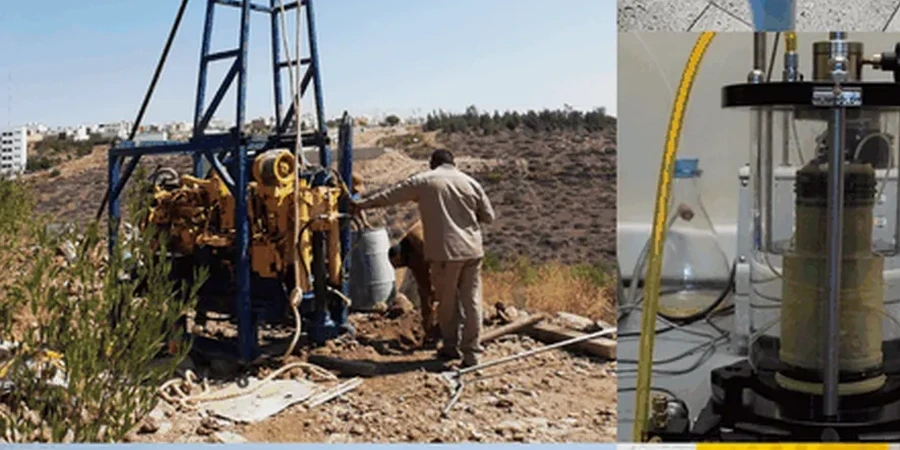
Field demonstration
Risks and considerations in Washington DC
Capitol Hill and Navy Yard sit less than two miles apart, but the subsurface tells two completely different stories. Capitol Hill rests on Pleistocene terrace gravels — dense, well-drained, easy to compact. Navy Yard sits on younger alluvium and historic Potomac River fill, much of it undocumented from 19th-century land reclamation. On Capitol Hill, a failed density test usually means the contractor needs another roller pass. At Navy Yard, a failed test often means the entire fill layer is unsuitable and needs undercutting. Skipping field density verification in either location is reckless, but in the fill zones near the Anacostia River it becomes actively dangerous. We have seen projects where undocumented fill extended twelve feet deep and compacted to barely 82% — and where the only thing preventing a slab failure was the CPT testing that flagged the problem early.
Our services
Our Washington DC field density program covers the full quality-control cycle, from Proctor reference curves to final DCRA sign-off. We work across all eight wards, including sites with limited laydown space and strict vibration limits.
In-Place Density Testing
ASTM D1556 sand cone tests performed per lift on compacted fill, backfill, and subgrade. We calibrate sand on-site and deliver field-signed reports within hours.
Modified Proctor Curves
Laboratory compaction curves per ASTM D1557 using the actual borrow material. Without this reference, field density numbers are meaningless.
Fill Source Verification
Grain size distribution and plasticity checks on delivered fill to confirm it matches the approved Proctor material before a single lift is placed.
Quick answers
Does DCRA accept sand cone tests, or do they require nuclear gauge results?
DCRA accepts ASTM D1556 sand cone results without hesitation. The sand cone method is the reference standard in IBC Chapter 18. Nuclear gauges are permitted but require a radioactive materials license, which adds cost and administrative burden — especially on short-duration projects in the District.
How much does a field density test cost in Washington DC?
A single sand cone test typically runs between US$100 and US$160, depending on site accessibility and the number of tests scheduled on the same day. We provide project-based pricing for ongoing QC work.
How deep does the sand cone test measure?
The test measures density within a single compacted lift, generally 4 to 6 inches thick. If you need density verification deeper than the lift thickness, we excavate through the lift and test the layer beneath — or combine the program with CPT soundings for a continuous profile.
Can you test density in gravel or crushed stone base?
ASTM D1556 works best in soils with maximum particle size under 1.5 inches. For open-graded aggregate base courses, the sand cone can still be used if we line the test hole carefully, but the water replacement method or a calibrated nuclear gauge may give more repeatable results. We evaluate the material first and recommend the appropriate method.